8+
years with .NET, mostly backend, but React daily too
Paweł Strupiechowski
Fullstack .NET + React · REST API · Kafka · AzureMost of my work is on distributed systems — REST APIs, Kafka, and streaming data. SOAP comes back for integrations with external systems. Cloud means Azure, Docker, and Kubernetes. Outside .NET and React, I also reach for Python with FastAPI.
8+
years with .NET, mostly backend, but React daily too
.NET + React
fullstack — I build backend and frontend together, not separately
Azure
microservices, REST APIs, and streaming data in the cloud
01
I build .NET services and plug them into Kafka when data has to flow live. Simple contracts, sensible service boundaries, so the system doesn't fall apart as it grows.
02
TypeScript and React in the same project as .NET. No separate teams, no back-and-forth over API shape.
03
Besides client work I run my own commercial apps — .NET and React on Azure, sometimes a Python API. New approaches get tested on my own projects before they land at work.
Selected projects
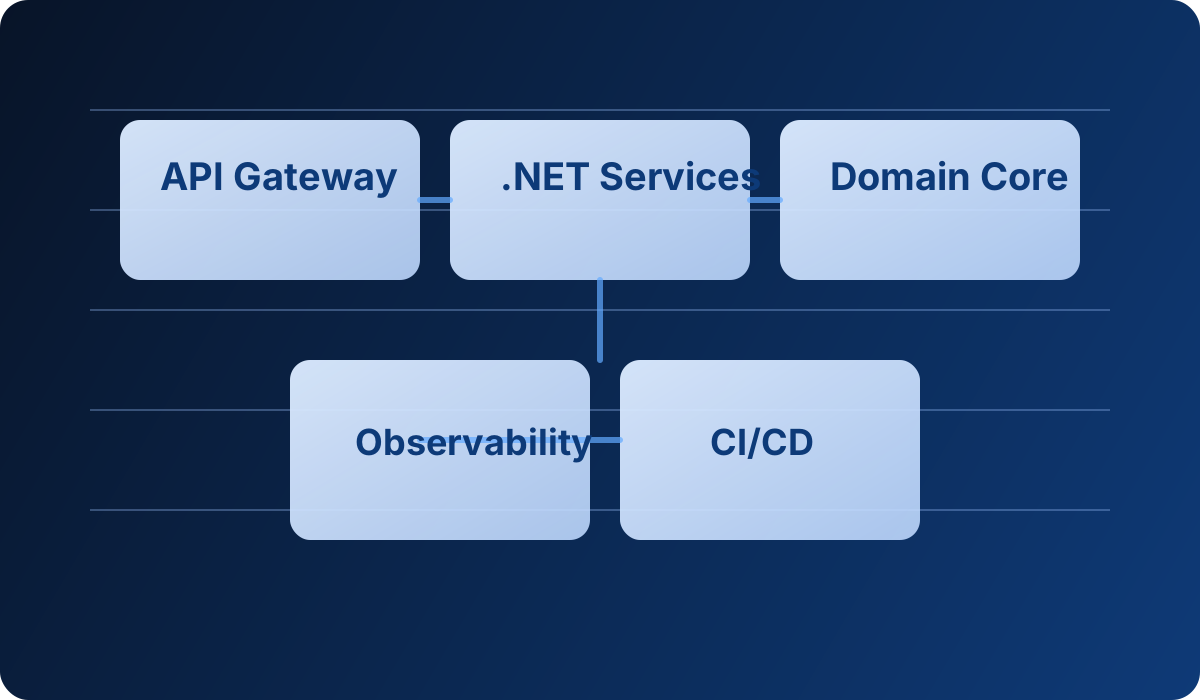
Enterprise project
Problem
Data flowed from multiple sources into different databases, and there was no single place to subscribe to changes of specific variables. Heavier analytical queries put pressure on the main operational database.
What I did
Built a Kafka pipeline: variable changes went to a topic, then into Apache Druid. Moved analytical queries off the transactional database onto Druid, so the operational system stopped feeling the load, and clients could subscribe to selected changes in real time.
Real-time
change subscriptions instead of batch polling
B+
records handled in Druid
0
analytical load on the operational system
Insurance · Customer and back-office portal
Problem
The portal combined new REST APIs with external systems that only spoke SOAP. Part of the code ran on .NET Framework, part on .NET Core. Both had to be maintained, and the old parts rewritten piece by piece, without taking the portal offline.
What I did
Extended REST APIs on .NET Core and wrote SOAP clients for external systems. Rewrote the legacy .NET Framework services gradually, on the fly, with no maintenance window. Frontend in React and TypeScript.
REST + SOAP
integrations with external systems
0 days
downtime during .NET Framework → .NET Core migration
One portal
customer and back-office on a shared backend
Own projects · client undisclosed
Problem
Alongside client work I ran my own commercial projects. I can't disclose the clients, but the scope was similar to my day-to-day work — I just had room for a few things that couldn't be tested on client projects.
What I did
Built a few applications from scratch: .NET REST APIs, microservices on Azure, React + TypeScript frontends, and Python APIs on FastAPI. CI/CD with GitHub Actions, deployed on Docker and Kubernetes.
Python + .NET
REST APIs in two stacks
Azure
hosting, deploy, CI/CD
React
frontend on top of each API
How I work
Before I start
First risks, system boundaries, and integrations. I'd rather lose a day on planning than a week on fixes.
Build
I split the solution into readable modules. Contracts, tests, and maintainability get looked after as I go.
After release
Monitoring, CI/CD, and telemetry. Shipping is not the finish line, it's when maintenance starts.
Principles
Stack
Day to day: .NET and React. Alongside that TypeScript, REST APIs, Kafka and streaming data, Azure with Docker and Kubernetes. SOAP for external integrations. Python with FastAPI for my own APIs and scripts.
Certifications

Microsoft · 2026
Verify →
Microsoft · 2026
Verify →

Microsoft · 2026
Verify →
Microsoft · 2026
Verify →
Microsoft · 2026
Verify →

Microsoft · 2026
Verify →
Contact
Drop me a few lines about the project — scope, timeline, what you're looking for.